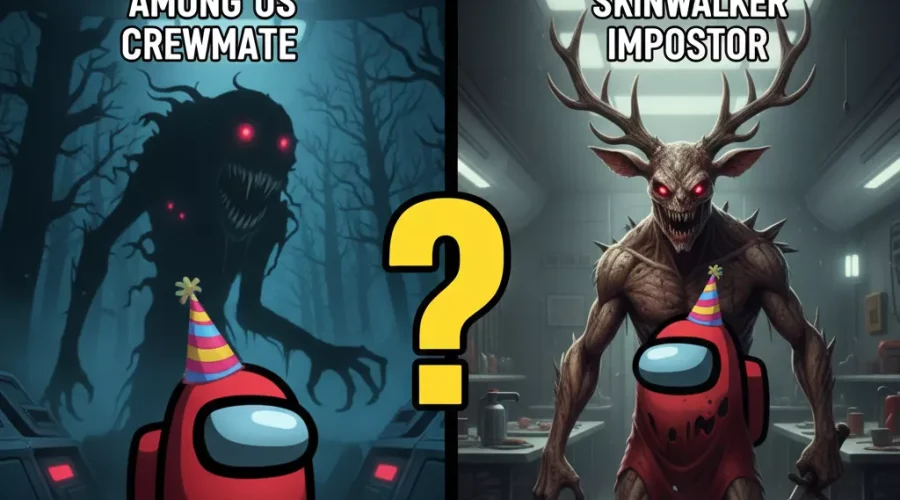
Among Us has captivated millions of players worldwide with its blend of strategy, teamwork, and deception. But there’s a darker theory floating around: Could the characters in Among Us be connected to the myth of skinwalkers? For those unfamiliar, skinwalkers are supernatural beings in Native American folklore known for their ability to shapeshift into animals. But how does this tie into the game where crewmates work to identify an Impostor among them?
While Among Us characters aren’t literally skinwalkers, there are intriguing parallels between the game’s shapeshifting, deceptive gameplay, and the skinwalker myth. Skinwalkers are beings in Native American folklore who can shape-shift into other creatures, much like the Impostors in Among Us who can disguise themselves to deceive others.
What Are Skinwalkers?
Before we dive into the connections between Among Us and skinwalkers, it’s essential to understand the myth itself. Skinwalkers, often referred to as “yee naaldlooshii” in Navajo culture, are believed to be witches or people who possess the ability to transform into various animals. This transformation is not just physical, but they can assume the identity of the creature they shift into, which allows them to manipulate their environment and deceive others.
The lore around skinwalkers is deeply rooted in fear, mystery, and respect for the supernatural in Native American culture. They are often considered malevolent beings, using their powers for harm, to trick, or to hunt.
Skinwalkers are shape-shifting creatures from Native American folklore, known for transforming into animals and deceiving others, which has eerie parallels with the deceptive gameplay in Among Us.
Skinwalkers and Deception: A Parallel to Among Us
Now, let’s look at the gameplay in Among Us. The game centers around crewmates working together to complete tasks while trying to identify the Impostor among them. The Impostor, much like a skinwalker, hides their true identity and manipulates others into believing they belong. This deception is crucial to the Impostor’s success, making them an expert at blending in and shifting suspicion onto others.
The parallels between skinwalkers and the Impostor are striking:
-
Shape-shifting: Skinwalkers can take the form of any creature, while Impostors can pretend to be any crewmate.
-
Deception: Both use deception to manipulate and mislead others.
-
Fear and Distrust: In folklore, skinwalkers are feared for their ability to infiltrate communities. Similarly, Impostors create fear and distrust among crewmates, making it hard to know who to trust.
In Among Us, the Impostor’s ability to deceive and blend in with crewmates mirrors the skinwalker’s ability to shape-shift and infiltrate. Both rely on creating fear and confusion to achieve their goals.
The Role of Impostors in Among Us
At the core of Among Us is the Impostor role. Impostors can sabotage tasks, eliminate crewmates, and frame others by leaving misleading clues. The heart of their deception lies in their ability to shapeshift, not literally, but in the sense that they assume the identity of a crewmate and blend in, making it harder for the real players to figure out who they are.
Much like skinwalkers in the lore, Impostors must remain hidden until the right moment to strike. The tension between the players in the game mirrors the unease that comes with the myth of the skinwalker—who could be a skinwalker, and who can you trust? The psychological aspect of fear and paranoia is central to both the game and the legend.
Comparing Skinwalkers and Other Shapeshifters in Mythology and Media
Skinwalkers aren’t the only shapeshifters in myth and media. We see similar themes in werewolves, changelings, and other mythical creatures who assume human or animal forms. However, what sets skinwalkers apart is the deep cultural significance they hold in Native American mythology. The fear surrounding them is rooted in respect and understanding of natural laws, unlike other shapeshifting creatures often depicted in popular media as more fantastical.
In modern media, shapeshifters are often used to explore themes of deception and identity. For instance, the “Mimic” (a creature that imitates others) shares similar traits with skinwalkers, as it too manipulates perception to cause fear and confusion. These creatures, whether in folklore or in games like Among Us, exploit the fear of the unknown and the inability to distinguish friend from foe.
Why the Skinwalker Theory Works in Among Us
So, why do players draw these comparisons between skinwalkers and Among Us characters? The answer lies in the game’s core mechanics:
-
Impersonation: Just as skinwalkers impersonate others to deceive, Impostors do the same by taking on the identity of a crewmate.
-
Psychological Tension: Both rely on psychological tactics to generate fear and confusion. In Among Us, trust is broken as crewmates begin to doubt everyone around them, mirroring the unsettling presence of a skinwalker in folklore.
-
Isolation: In both the game and the myth, the individual who is deceived or attacked is left isolated, unable to trust anyone, adding to the horror of being unable to protect oneself.
Conclusion
While Among Us characters are not literally skinwalkers, the comparisons between the game’s deceptive gameplay and the myth of skinwalkers are undeniable. Both rely on shape-shifting, deception, and creating fear to manipulate others. Among Us capitalizes on this mythological archetype to deliver a game that’s just as terrifying as it is fun, where trust is everything, and the fear of being betrayed lurks around every corner.
If you’re fascinated by the connections between gaming and folklore, you might also enjoy exploring other tools on Tools Tecique. Check out our game analysis tools, lore-based articles, and free Finational calculators designed for fans and gamers to dive deeper into their favorite myths and stories!
Resources:
Call-to-Action
Intrigued by the connection between folklore and gaming? Explore more articles on Tools Tecique and immerse yourself in the stories and tools that power your favorite games!
FAQs
Are Among Us characters skinwalkers?
No, Among Us characters are not skinwalkers. However, both share similarities in deception. Skinwalkers shapeshift to impersonate others, while Impostors in Among Us disguise themselves as crewmates to deceive others.
2. What are skinwalkers in Native American lore?
Skinwalkers are shape-shifting beings in Native American folklore who can transform into animals or other humans to deceive and harm others.
3. How does the deception in Among Us relate to skinwalker lore?
Both involve deception and disguise. Skinwalkers impersonate others to cause harm, while Impostors in Among Us do the same to sabotage the crewmates.
4. Can the Impostors in Among Us be compared to skinwalkers?
Yes, Impostors in Among Us can be compared to skinwalkers, as both use deception and disguise to manipulate and confuse others.
5. Are there other shapeshifting creatures in folklore like skinwalkers?
Yes, other shapeshifters like werewolves, changelings, and mimics exist. They all share the ability to change forms and deceive others, similar to skinwalkers.
6. How does the skinwalker myth influence modern media?
The skinwalker myth influences media by inspiring stories of shapeshifting, deception, and fear. Games like Among Us incorporate similar themes of distrust and hidden identities.
Read Also: Among Us Characters: Names, Appearance, Height & Drawing Guide