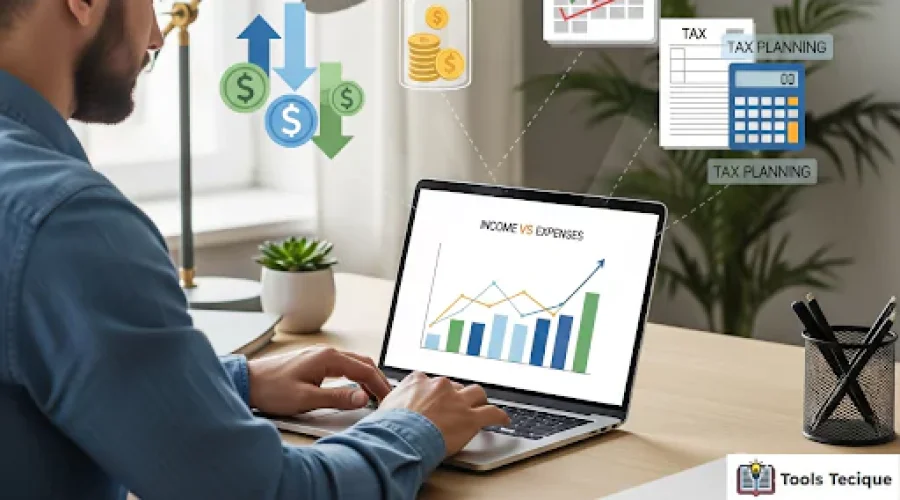
Welcome to freelancing! Here, freedom and flexibility are your greatest rewards. This guide gives you a clear plan to manage your money. It helps you build an emergency fund and achieve lasting financial stability. Let’s get started on your journey to financial empowerment.
Freelancers enjoy flexibility but often face irregular income. This guide outlines how to track cash flow, create a baseline budget, build an emergency fund, and plan for taxes. With smart strategies like separating personal and business finances, setting aside savings, and long-term planning, freelancers can achieve financial stability and peace of mind.
Navigating the Tides of Freelance Finances
The freelance journey offers unparalleled professional mobility. It comes with a unique set of financial challenges. Freelancing often involves unpredictable cash flow, unlike traditional employment with a steady paycheck. Managing finances as a freelancer can feel like riding a financial rollercoaster.
Acknowledging the “Feast or Famine” Cash Flow Cycle and Its Psychological Impact
The “feast or famine” cycle is a reality for many freelancers. According to a survey by Freelancermap, 38% of freelancers identify inconsistent earnings as a major challenge. One month, you might have cash from client payments. Next, you could be chasing invoices. Income volatility can lead to stress, make future planning tough, and create ongoing uncertainty.
Why Financial Stability and Emergency Funds are Your Pillars of Freedom
True freelance freedom means more than being your own boss. It’s also about having financial stability. An emergency fund is your safety net. It gives you a financial cushion for unexpected expenses. This helps you manage slow times without stress. Plus, it lets you make career choices based on opportunity, not fear.
What This Article Will Cover: Your Roadmap to Financial Resilience
This guide provides you with a comprehensive roadmap to achieve freelance financial success. Here’s what we will cover:
- Understanding and tracking your cash flow
- Building a robust emergency fund
- Tax planning strategies
- Retirement savings options
- Smart investing for long-term financial health
Understanding Your Freelance Cash Flow: The Foundation of Control
Taking charge of your cash flow is the first step to building a sustainable business. It means knowing what money comes in and goes out. This helps you make smart financial choices.
Defining Cash Flow: Income, Expenses, and the Net Picture
Cash flow is the movement of money into and out of your business. To get a clear picture, you need to track:
- Income: All the money you receive from client payments and other income sources.
- Expenses: These include:
- Fixed expenses, such as rent and software subscriptions.
- Variable expenses, like supplies and professional development.
- Net Cash Flow: The difference between your income and expenses. A positive net cash flow means you have extra cash. A negative cash flow shows you’re spending more than you earn.
The Critical Distinction: Personal vs. Business Cash Flow for Solopreneurs
As a freelancer, it’s easy to blur the lines between your personal and business finances. But keeping them separate is crucial for accurate tracking and tax planning. Open a dedicated business savings account to manage your business expenses and income. This separation simplifies your financial analysis and makes tax season much less stressful.
Why is Tracking Cash Flow Non-Negotiable?
According to a guide by Twine, tracking your finances helps identify patterns in your income and expenses.
- Cash flow analysis lets you expect income fluctuations and prepare for lean months.
- Regular tracking provides essential data for effective budgeting.
- Stay in control of your financial future, even during economic downturns.
Digital Tools and Cash Flow Apps to Simplify Tracking
You can cut the need to track everything manually. Many digital tools can simplify cash flow management. Invoicing software like FreshBooks and QuickBooks helps you manage client payments. They also send automated reminders. Budgeting apps like Mint or YNAB (You Need A Budget) are also great for monitoring your personal cash flow. For a look at how artificial intelligence can aid your personal and professional growth, including conversational assistance, explore more about chracter ai.
Practical Strategies for Day-to-Day Cash Flow Management
Effective day-to-day cash management is about creating systems for your unique situation. A solid budget and better payment methods can help manage an irregular income.
Building Your Baseline Budget for Irregular Income
- Calculate Your Essential Costs: Write down your must-have monthly expenses. Include housing, utilities, groceries, and insurance. This total is your baseline—the least you need to earn each month.
- Plan for Discretionary Spending: Save money for fun after paying for your essentials. This can include dining out or entertainment. This gives you spending flexibility while ensuring your core needs are met.
Optimizing Your Income Stream and Client Payments
You can boost your cash flow by planning how you manage client payments. When negotiating contracts, focus on getting good payment terms. For example, ask for a 50% upfront deposit. Offer a small discount for early payment. This can encourage clients to pay sooner. Diversifying your income is smart. You can do this by using affiliate marketing or selling digital products. Both options can help you create a stronger financial base.
What is the Foundation of Financial Security?
A solid emergency fund is key to financial security for freelancers. This fund protects you from surprises. It brings peace of mind and helps you handle any challenge.
Why an Emergency Fund is Your Freelance Safety Net
An emergency fund is a pool of money for unexpected life events. For freelancers, this could mean a sudden loss of a major client, an unexpected medical bill, or the need to replace essential equipment. Without this financial cushion, you might have to take on unwanted projects or go into debt.
How Much Do You Really Need? Calculating Your Emergency Savings Goal
- The 3-6 Month Rule: According to Inter, experts say you should save enough for three to six months of basic living costs.
- Consider Your Risk Tolerance: Aim for six months or more if you have dependents or an unstable income.
- Include Business Expenses: Add your fixed business expenses to your calculations. This helps ensure your business can weather slow periods.
Where to Stash Your Emergency Savings: Accessible Yet Growth-Oriented
You should keep your emergency fund in a liquid or quick-access account. A high-yield savings account is a great choice. It gives you a higher interest rate than a regular account. You can withdraw money without difficulty. Avoid locking your emergency savings in long-term investments with market risks.
Strategies for Building Your Fund with Efficiency
Building your emergency fund takes discipline. One great way to build emergency savings is to set up automatic monthly transfers. Move money from your checking account to a high-yield savings account. This makes saving easy and consistent. Small, regular contributions can really add up. They help you build a financial cushion without feeling the strain.
Navigating Freelance-Specific Financial Challenges: Taxes and Protection
Freelancing comes with unique responsibilities, particularly regarding taxes and personal protection. Planning in these areas is key. It helps you avoid costly surprises and protects your financial future.
Proactive Tax Planning for Self-Employment
| Tip | Details |
| Estimate and Set Aside | Set aside 25-30% of every payment for taxes to cover Social Security and Medicare. |
| Pay Quarterly | Make estimated quarterly tax payments using IRS Form 1040-ES to avoid a large tax bill. |
| Track Deductions | Keep detailed records of business expenses to deduct and lower your taxable income. |
Essential Protections: Insurance and Benefits for Freelancers
Without an employer providing benefits, it’s up to you to secure your own protections. Health insurance is a must-have to shield you from crippling medical debt. Also, think about Disability Insurance. It can replace part of your income if you can’t work because of illness or injury.
Managing Debt Wisely in a Freelance Environment
Debt, especially high-interest credit card debt, is risky if your income is inconsistent. Prioritize paying down existing debt as quickly as possible. Pay your credit card bill in full each month. This helps you avoid interest charges and keeps your credit score safe.
How Can You Ensure Long-Term Stability?
Moving beyond day-to-day survival requires a focus on long-term financial planning. Saving and investing with careful consideration is essential for a successful freelance career.
Strategic Financial Planning for a Sustainable Freelance Career
Your financial planning should extend beyond the next few months. Establish clear long-term goals. Examples include buying a home, funding your kids’ education, and reaching financial freedom. A financial advisor who knows business owners’ needs can create a custom strategy for you.
Smart Investing for Future Growth and Financial Freedom
Once you have a solid emergency fund and boosted your retirement savings, you can explore other ways to ai stock and grow your wealth. This could include investing in low-cost index funds, dividend stocks, or rental properties. Diversifying your investments helps you create passive income. This can lead to long-term financial freedom.
The Path to Financial Freedom Through Disciplined Cash Flow Management
Disciplined cash flow management is the thread that ties all these strategies together. You can turn your freelance work from a risky gig into a stable, profitable career. To do this, monitor your finances regularly. Make a budget that shows thoughtful planning. Also, create a plan for future needs.
Your Journey to Freelance Financial Empowerment
Taking control of your freelance finances is one of the most empowering steps. Understanding your cash flow helps you build a strong emergency fund. Also, planning for the long term creates the financial stability you need to thrive. Remember that every small step you take today builds a more secure and prosperous future. Start your financial planning now and build the freelance career of your dreams.
FAQs
Q1. Why do freelancers struggle with cash flow?
Freelancers face inconsistent income, often cycling between busy and slow months. This irregular cash flow makes planning harder and adds financial stress. By tracking income and expenses consistently, freelancers can prepare for lean times and reduce uncertainty.
Q2. How can freelancers separate personal and business finances?
Opening a dedicated business account for freelance income and expenses keeps finances organized. This separation simplifies tracking, budgeting, and tax filing while clarifying true business profitability.
Q3. How much should freelancers save for emergencies?
Freelancers should save 3–6 months of living expenses, including business costs. This emergency fund cushions against lost clients, unexpected bills, or slow months, providing security and financial independence during uncertain times.
Q4. What strategies improve freelance cash flow?
Strategies include requesting upfront deposits, offering early payment discounts, diversifying income sources, and automating expense tracking. These actions improve cash flow consistency and reduce reliance on a single client or project.
Q5. What long-term financial steps should freelancers take?
Freelancers should invest in retirement savings, pay off high-interest debt, and build wealth through diversified investments. Strategic planning helps freelancers move beyond survival, ensuring lasting stability and financial freedom.
References