
Votre cote de crédit vous suit dans presque toutes vos décisions financières importantes : demandes de prêt hypothécaire, prêts automobiles, contrats de location et parfois même candidatures à un emploi. Pourtant, la plupart des gens n’ont qu’une vague idée de ce qui détermine réellement ce chiffre à trois chiffres.
Selon Experian, le score de crédit moyen des Américains a atteint 717 en 2025. Des millions d'entre eux se situent encore en dessous de 670, seuil considéré comme équitable par la plupart des prêteurs, et paient des taux d'intérêt de 2 % à 5 % supérieurs à ceux des emprunteurs dont le score est supérieur à 740. Sur un prêt immobilier de 300 000 $, cet écart de taux représente un surcoût de 80 000 $ à 150 000 $ sur 30 ans.
Les 5 facteurs du score FICO et leur pondération exacte
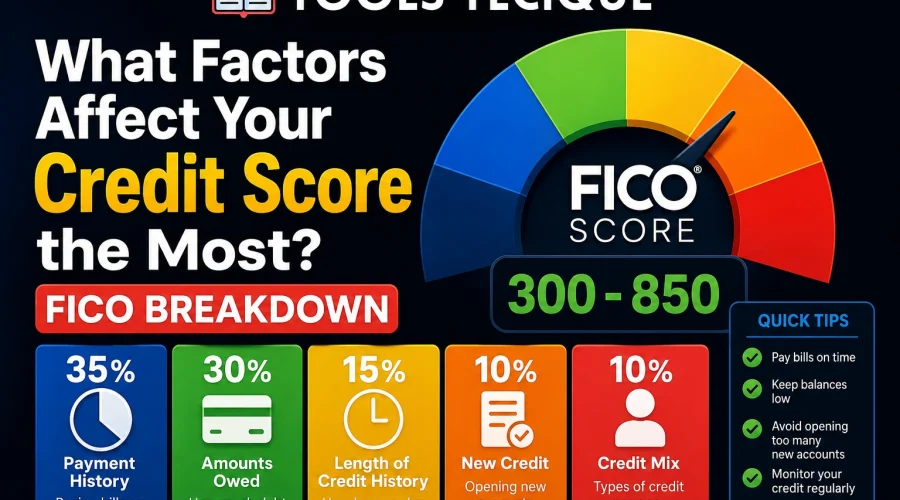
Les scores de crédit FICO, utilisés par 90 % des principaux organismes de crédit, sont calculés à partir de cinq facteurs : l’historique de paiement (35 %), le taux d’utilisation du crédit (30 %), l’ancienneté du crédit (15 %), la diversification des crédits (10 %) et les nouvelles demandes de crédit (10 %). L’historique de paiement et le taux d’utilisation du crédit représentent à eux deux 65 % du score, ce qui en fait les deux facteurs les plus influents. Un seul paiement manqué peut faire chuter un bon score de 60 à 110 points, tandis qu’une réduction du taux d’utilisation en dessous de 10 % peut en faire gagner de 20 à 40 en un seul cycle de facturation.
| Facteur FICO | Poids | Ce que cela mesure |
|---|---|---|
| Historique des paiements | 35% | Le facteur le plus important est de savoir si vous payez vos factures à temps. |
| Montants dus (Utilisation) | 30% | Quel pourcentage de votre crédit disponible utilisez-vous ? |
| Durée de l'historique de crédit | 15% | Âge moyen de tous vos comptes |
| Crédit Mix | 10% | Diversité des types de crédit : cartes, prêts, hypothèques |
| Nouvelles demandes de crédit | 10% | Demandes récentes d'ouverture de nouveaux comptes de crédit |
Facteur 1 : Historique des paiements (35 %) Le principal facteur
L'historique de paiement est le facteur FICO le plus important, avec un poids de 35 %. Il indique si vous avez réglé tous vos comptes de crédit à temps. Un retard de paiement de 30 jours ou plus est considéré comme un défaut de paiement et peut faire baisser votre score de 750 de 60 à 110 points. Les retards de paiement inférieurs à 30 jours ne sont généralement pas signalés. Une fois signalé, un défaut de paiement reste inscrit sur votre dossier de crédit pendant 7 ans, même si son impact diminue considérablement après 2 ans de paiements réguliers et ponctuels suivant l'incident.
- Un seul paiement manqué avec plus de 30 jours de retard peut faire chuter un score de 750 de 60 à 110 points.
- Un retard de paiement de 90 jours cause plus de dommages qu'un retard de paiement de 30 jours.
- Les incidents de paiement restent inscrits sur votre dossier pendant 7 ans, mais disparaissent après 2 ans de paiements réguliers.
- La mise en place d'un prélèvement automatique, au moins pour le montant minimum, permet d'éviter complètement ce type de dégâts.
D'après notre expérience : le score d'une photographe indépendante a chuté de 74 points en un mois. Elle n'avait jamais manqué un paiement intentionnellement, mais un changement d'adresse de facturation a entraîné l'envoi de relevés à son ancienne adresse. Une carte a été impayée pendant 35 jours avant qu'elle ne s'en aperçoive. Une erreur administrative a provoqué une importante baisse de son score. Nous avons déposé une demande de geste commercial auprès de l'émetteur (avec un succès partiel) et mis en place le prélèvement automatique immédiatement. Son score est revenu à un niveau proche de son niveau initial en 14 mois.
Facteur 2 : Utilisation du crédit (30 %) – Le plus rapide à évoluer
Le taux d'utilisation du crédit mesure le solde total des cartes de crédit divisé par leur limite totale. Un taux recommandé pour un bon score est inférieur à 30 %, et un taux inférieur à 10 % offre des résultats optimaux. Une personne disposant d'une limite totale de 10 000 $ devrait maintenir son solde sous les 3 000 $ pour un bon score et sous les 1 000 $ pour un excellent score. Le taux d'utilisation est recalculé mensuellement lors de la déclaration des soldes. Rembourser ses soldes peut améliorer votre score en un seul cycle de facturation, ce qui en fait le facteur le plus dynamique du modèle FICO.
| Taux d'utilisation | Impact du score | Exemple (limite de 10 000 $) |
|---|---|---|
| Moins de 10% | Excellent | Solde inférieur à 1 000 $ |
| 10 % à 30 % | Bien | Solde de 1 000 $ à 3 000 $ |
| 30 % à 50 % | Modérément négatif | Solde de 3 000 $ à 5 000 $ |
| 50 % à 75 % | Négatif significatif | Solde de 5 000 $ à 7 500 $ |
| Au-dessus de 75% | Négatif sévère | Solde supérieur à 7 500 $ |
D'après notre expérience : un petit entrepreneur utilisait sa carte de crédit personnelle pour ses dépenses professionnelles, atteignant régulièrement 80 % de son solde avant de le rembourser intégralement. Il n'a jamais eu de retard de paiement ni d'intérêts, mais son score de crédit stagnait autour de 640. Il lui fallait un score de 680 pour obtenir un prêt professionnel. Nous avons résolu son problème en 60 jours : il a demandé une augmentation de sa limite (réduisant instantanément son taux d'utilisation) et a opté pour un paiement bimensuel. Son score a atteint 694 sans qu'il ait modifié aucune autre habitude.
Facteur 3 : Durée de l'historique de crédit (15 %)
L'ancienneté de votre historique de crédit représente 15 % de votre score FICO. Elle prend en compte l'âge de votre compte le plus ancien, l'âge moyen de tous vos comptes et la date de dernière utilisation de chaque compte. L'âge moyen optimal des comptes est généralement de 7 ans ou plus. Fermer d'anciennes cartes de crédit raccourcit l'âge moyen de vos comptes et augmente simultanément votre taux d'utilisation global, ce qui constitue l'une des actions les plus préjudiciables à un profil de crédit par ailleurs sain.
- La fermeture de votre carte la plus ancienne réduit la durée de l'historique et augmente simultanément le taux d'utilisation.
- L'ouverture rapide de plusieurs nouveaux comptes réduit l'âge moyen de vos comptes.
- Les comptes inactifs peuvent être clôturés par l'émetteur. Utilisez occasionnellement vos anciennes cartes pour les maintenir actives.
Facteurs 4 et 5 : Composition du crédit (10 %) et nouveaux crédits (10 %)
La diversification de votre historique de crédit mesure votre expérience en matière de gestion de différents types de crédit : comptes renouvelables (cartes de crédit) et prêts à tempérament (automobile, étudiant, personnel, immobilier). Chaque nouvelle demande de crédit représente 10 % de votre score. En général, une demande de crédit entraîne une baisse de 5 à 10 points pendant 12 mois. Plusieurs demandes de prêt immobilier ou automobile effectuées dans un délai de 14 à 45 jours sont considérées comme une seule demande par FICO, car les consommateurs comparent les taux.
| Type de requête | Impact du score | Exemples |
|---|---|---|
| Enquête difficile | 5 à 10 points pendant une durée maximale de 12 mois. | Demandes de cartes de crédit, de prêts hypothécaires, de prêts automobiles et de prêts personnels |
| Demande en douceur | Impact du score zéro | Vérification de votre propre score, vérification des antécédents de l'employeur, offres de pré-approbation |
Foire aux questions
Q : À quelle vitesse puis-je améliorer ma cote de crédit ?
A : L'amélioration la plus rapide provient de la réduction du taux d'utilisation du crédit ; cela peut améliorer votre score en un seul cycle de facturation (30 à 45 jours). Rembourser une carte de crédit utilisée au maximum peut vous faire gagner de 20 à 50 points. L'amélioration de l'historique de paiement nécessite 6 à 12 mois de paiements réguliers et ponctuels pour compenser significativement les retards de paiement passés. Utilisez le Calculateur de score de crédit Chez ToolsTechnique, modélisez votre parcours d'amélioration.
Q : Est-ce que consulter ma propre cote de crédit a un impact négatif sur celle-ci ?
R : Non. Consulter votre propre score de crédit est une simple demande d'information sans incidence sur votre score. Vous avez droit à un rapport de crédit gratuit par an auprès de chaque agence (Equifax, Experian et TransUnion) sur annualcreditreport.com. De nombreux émetteurs de cartes offrent également un accès gratuit mensuel à votre score FICO via leurs applications.
Q : La fermeture d'une carte de crédit a-t-elle un impact négatif sur ma cote de crédit ?
R : Généralement oui, cela réduit le crédit disponible (augmente le taux d'utilisation) et peut raccourcir votre historique de crédit. Si vous devez fermer une carte, fermez la plus récente, celle avec la limite la plus basse, et non la plus ancienne ou celle avec la limite la plus élevée.
Q : De combien un paiement manqué fait-il baisser ma cote de crédit ?
R : L'impact dépend de votre score initial. Un score de 750 peut baisser de 60 à 110 points suite à un retard de paiement de 30 jours. Un score de 680 baisse de 40 à 70 points. Les scores plus élevés baissent davantage car le risque de perte est plus important. L'impact sur votre score s'estompe généralement dans les deux ans suivant le retour à des paiements réguliers.
Q : Quel score de crédit me faut-il pour obtenir un prêt hypothécaire ?
R : Les prêts hypothécaires conventionnels exigent généralement un score FICO minimum de 620. Les prêts FHA acceptent un score de 580 avec un apport de 3,5 %. Les meilleurs taux sont réservés aux emprunteurs ayant un score de 740 ou plus. CFPBUne différence de 100 points dans votre score peut faire varier votre taux hypothécaire de 0,5 % à 1,5 %, ce qui représente des dizaines de milliers de dollars sur 30 ans.
Commencez à améliorer votre score dès aujourd'hui
Les deux actions les plus efficaces : activer le prélèvement automatique sur tous vos comptes et réduire le taux d’utilisation de vos cartes de crédit à 30 %. Ces deux mesures contribuent à hauteur de 65 % à votre score FICO total.
Utilisez le service gratuit Calculateur de score de crédit sur ToolsTechnique pour estimer vos facteurs de score actuels, puis utilisez le Calculateur de remboursement de dette Élaborer un plan de remboursement du solde qui réduise l'utilisation le plus rapidement possible.
