










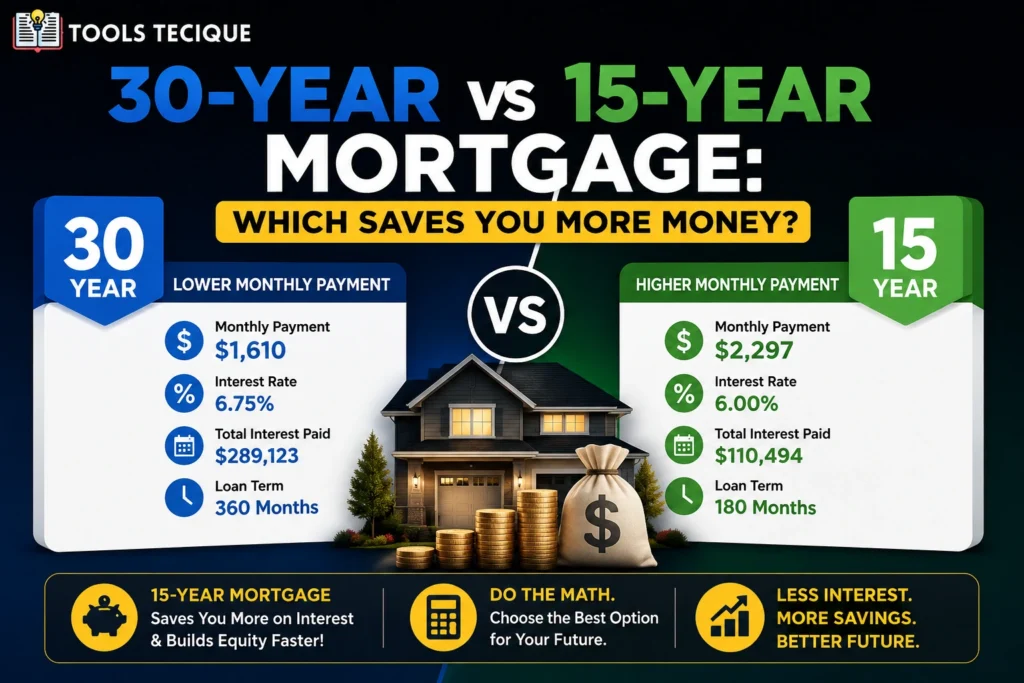

Dies ist eine der wichtigsten finanziellen Entscheidungen, vor denen Hausbesitzer stehen, und die meisten entscheiden sich eher dafür, welche Rate aktuell in ihr Budget passt, als dafür, welche Option am effektivsten Vermögen aufbaut. Beide Ansätze haben ihre Berechtigung. Doch zunächst benötigen Sie ein umfassendes Bild.
Laut [Quelle einfügen] wird der durchschnittliche Zinssatz für 30-jährige Hypotheken mit festem Zinssatz in den USA im Jahr 2026 bei 6,8 % liegen. BankrateDer durchschnittliche Zinssatz für 15-jährige Festzinsdarlehen liegt bei etwa 6,1 % bis 6,3 %. Diese Zinsdifferenz bringt einen weiteren wichtigen Aspekt in den Vergleich ein.
Vergleich der monatlichen Raten: 30 Jahre vs. 15 Jahre
Bei einer Hypothek von 400.000 US-Dollar und den aktuellen Zinssätzen von 2026 (6,8 % für 30 Jahre, 6,2 % für 15 Jahre) beträgt die monatliche Rate für Zinsen und Tilgung bei einer 30-jährigen Laufzeit 2.607 US-Dollar, bei einer 15-jährigen Laufzeit hingegen 3.415 US-Dollar – ein Unterschied von 808 US-Dollar pro Monat. Der Kreditnehmer mit der 30-jährigen Laufzeit zahlt insgesamt 538.446 US-Dollar an Zinsen, während der Kreditnehmer mit der 15-jährigen Laufzeit 214.700 US-Dollar zahlt – eine Ersparnis von 323.746 US-Dollar. Die niedrigere Rate bei der 30-jährigen Laufzeit hat jedoch langfristig einen hohen Preis.
| Darlehensbetrag | 30 Jahre @ 6,8 % | 15 Jahre @ 6,2 % | Zusätzliche Kosten/Monat | Zinsen gespart |
|---|---|---|---|---|
| $300,000 | $1,955 | $2,561 | +$606 | $234,900 |
| $400,000 | $2,607 | $3,415 | +$808 | $313,200 |
| $500,000 | $3,259 | $4,269 | +$1,010 | $391,500 |
Bei einem Darlehen von 400.000 US-Dollar spart man durch die Wahl einer Laufzeit von 15 Jahren über 300.000 US-Dollar. Das reicht aus, um ein Altersvorsorgekonto zu füllen, eine zweite Immobilie zu erwerben oder die Hochschulausbildung mehrerer Kinder zu finanzieren.
Eigenkapitalaufbau: Welcher Kredit bringt Sie schneller voran?
Eine 15-jährige Hypothek baut in den ersten Jahren etwa doppelt so schnell Eigenkapital auf wie eine 30-jährige. Nach fünf Jahren bei einem Darlehen von 400.000 US-Dollar zu den Zinssätzen von 2026 hat ein Kreditnehmer mit 15-jähriger Laufzeit rund 89.000 US-Dollar an Kapital getilgt, während ein Kreditnehmer mit 30-jähriger Laufzeit nur 28.000 US-Dollar getilgt hat. Dieser Eigenkapitalunterschied ist relevant für Umschuldungsoptionen, Kreditlinien auf das Eigenheim und das gesamte Nettovermögen. Ein schnellerer Eigenkapitalaufbau bietet zudem einen größeren finanziellen Puffer bei sinkenden Immobilienpreisen.
| Jahr | 30-Jahres-Saldo | 15-Jahres-Saldo | Equity Advantage |
|---|---|---|---|
| Jahrgang 5 | $372,000 | $311,000 | +$61,000 |
| Jahrgangsstufe 10 | $339,000 | $194,000 | +$145,000 |
| Jahrgang 15 | $295,000 | 0 € (abbezahlt) | +$295,000 |
Nach 15 Jahren ist der Kreditnehmer mit einer Laufzeit von 15 Jahren Alleineigentümer seines Hauses. Der Kreditnehmer mit einer Laufzeit von 30 Jahren schuldet noch 295.000 US-Dollar und hat weitere 15 Jahre mit Zahlungen vor sich.
Aus eigener Erfahrung: Eine 38-jährige Lehrerin stand vor der Wahl zwischen einem 30-jährigen Darlehen mit 2.100 Dollar monatlicher Rate und einem 15-jährigen mit 2.820 Dollar monatlicher Rate. Der monatliche Unterschied von 720 Dollar erschien ihr enorm. Eine genaue Berechnung ergab jedoch, dass sie mit dem 15-jährigen Darlehen mit 53 Jahren schuldenfrei wäre, wenn ihre Kinder studieren würden. Beim 30-jährigen Darlehen hätte sie bis zum 68. Lebensjahr zahlen müssen. Sie schränkte ihre Ausgaben ein, entschied sich für das 15-jährige Darlehen und bezeichnet es als die beste finanzielle Entscheidung ihres Lebens.
Wann eine 30-jährige Hypothek sinnvoller ist
Eine 30-jährige Hypothek ist in vier Situationen sinnvoller als eine 15-jährige: wenn das Einkommen schwankt oder instabil ist (niedrigere Zahlungen schützen vor mageren Monaten), wenn hochverzinsliche Schulden zuerst getilgt werden sollten (Kreditkartenschulden mit 24 % kosten mehr als die Differenz zwischen Hypothekenzins und monatlicher Rate), wenn die monatliche Differenz von 600 bis 1.000 US-Dollar regelmäßig mit höheren Renditen als dem Hypothekenzins angelegt wird oder wenn die höhere Rate Ihr Budget so stark belasten würde, dass es zu finanziellen Schwierigkeiten oder Zahlungsausfällen käme.
| Stattdessen wurden 808 $/Monat investiert | Rendite | Wert nach 15 Jahren |
|---|---|---|
| Monatliche Investition | 5% | $213,400 |
| Monatliche Investition | 7% | $255,000 |
| Monatliche Investition | 10% | $336,800 |
Die Mathematik spricht nur dann für die 30-jährige Laufzeit, wenn man die Differenz tatsächlich 15 Jahre lang jeden Monat anlegt – eine Disziplin, die die meisten Menschen nicht aufbringen. Die 15-jährige Hypothek zwingt durch eine rechtlich bindende Verpflichtung zum Sparen.
Der Mittelweg: Sondertilgungen bei einem 30-jährigen Darlehen
Zusätzliche Tilgungszahlungen bei einer 30-jährigen Hypothek führen zu einer Laufzeit, die einer 15-jährigen Hypothek ähnelt, und erhalten gleichzeitig die Zahlungsflexibilität. Werden monatlich 400 bis 500 US-Dollar zusätzlich zu einer 30-jährigen Hypothek über 400.000 US-Dollar mit einem Zinssatz von 6,8 % eingezahlt, verkürzt sich die Laufzeit von 30 auf etwa 20 Jahre. Dadurch lassen sich über 200.000 US-Dollar an Zinsen sparen, während gleichzeitig die Option erhalten bleibt, in finanziellen Notlagen nur die Mindestrate zu zahlen. Diese Flexibilität ist der Hauptvorteil der Sondertilgungsstrategie gegenüber einer echten 15-jährigen Laufzeit.
Verwenden Sie die Tilgungsrechner für Kredite bei ToolsTecique, um genau zu modellieren, wie zusätzliche monatliche Zahlungen Ihren Tilgungstermin und Ihre gesamten Zinskosten verändern.
Aus Erfahrung: Ein junges Paar, das sein erstes Haus innerhalb von vier bis sechs Jahren verkaufen wollte, fragte sich, ob es eine 15- oder 30-jährige Hypothek aufnehmen sollte. Die 15-jährige Hypothek hätte über die gesamte Laufzeit 127.000 Dollar gespart, aber sie wollten bereits nach fünf Jahren ausziehen. Über fünf Jahre hinweg kostete sie die 30-jährige Hypothek 12.400 Dollar mehr an Zinsen. Die 15-jährige Hypothek verursachte hingegen 48.600 Dollar höhere monatliche Raten. Unterm Strich war die 30-jährige Hypothek für ihre Situation 36.200 Dollar günstiger. Die Laufzeit ist wichtig, aber auch die Wohndauer.
Häufig gestellte Fragen
F: Ist eine 15-jährige Hypothek immer besser als eine 30-jährige?
A: Nicht immer. Eine 15-jährige Laufzeit ist mathematisch gesehen vorteilhafter für Kreditnehmer mit langfristigem, stabilem Einkommen und ohne hochverzinsliche Schulden. Eine 30-jährige Laufzeit eignet sich für Käufer mit schwankendem Einkommen, erheblichen anderen Schulden oder einer ausgeprägten Anlagedisziplin. Die richtige Wahl hängt von Ihrer individuellen Situation ab und ist keine allgemeingültige Regel.
F: Wie viel höher ist eine Zahlung über 15 Jahre im Vergleich zu einer Zahlung über 30 Jahre?
A: Typischerweise 35 % bis 45 % höher. Bei einem Darlehen von 400.000 $ zu den Zinssätzen von 2026 beträgt die Differenz etwa 808 $ pro Monat. Nutzen Sie die Hypothekenrechner Bei ToolsTecique erhalten Sie Ihre genauen Zahlen.
F: Haben 15-jährige Hypotheken niedrigere Zinssätze?
A: Ja. Im Jahr 2026 wird der Zinssatz für 15-jährige Anleihen etwa 0,5 % bis 0,7 % niedriger sein als der entsprechende Zinssatz für 30-jährige Anleihen. BankrateDieser Zinsvorteil führt dazu, dass die gesamten Zinsersparnisse noch größer sind, als der reine Zahlungsvergleich vermuten lässt.
F: Was passiert, wenn ich eine 30-jährige Hypothek aufnehme und Sondertilgungen leiste?
A: Eine sinnvolle Strategie. Durch die monatliche Aufstockung einer 30-jährigen Hypothek über 400.000 US-Dollar um 400 US-Dollar verkürzt sich die Laufzeit um etwa 10 Jahre und es werden über 200.000 US-Dollar an Zinsen eingespart, während gleichzeitig die Flexibilität bei der Mindestzahlung in finanziellen Notlagen erhalten bleibt.
F: Wie beeinflusst meine Kreditwürdigkeit die Wahl der Laufzeit meines Hypothekendarlehens?
A: Ihre Bonität bestimmt Ihren Zinssatz, der sich auf beide Optionen auswirkt. Mit einer Bonität von 760 oder mehr maximieren Sie den Zinsvorteil bei einer Laufzeit von 15 Jahren. Prüfen Sie Ihre Bonität bei der [Name der Bank/des Unternehmens einfügen]. Kreditwürdigkeitsrechner Bei ToolsTecique können Sie Ihren Tarifstatus ermitteln, bevor Sie einen Antrag stellen.
Führen Sie beide Optionen mit Ihren Zahlen durch.
Modellieren Sie beide Terme mit dem kostenlosen Hypothekenrechner bei ToolsTecique. Dann verwenden Sie die Tilgungsrechner für Kredite um einen vollständigen Zahlungsplan für jede Option nebeneinander zu sehen.